A simple cotton T-shirt can become the garment that brings a campaign, a team, or a brand together. Our premium 180gsm 100% cotton men’s knitted T-shirt combines a classic crew neck, short sleeves, and a plain design with space for your own visual identity. It is a versatile product direction for custom logo printing, promotional apparel, and wholesale bulk orders.
At YWJC PROMOS, we bring the garment and the project together. From choosing the size mix to developing the logo presentation, we help distributors, agencies, and business buyers organize a branded clothing order around the people who will wear it. The result starts with a clear product choice and a design that gives recipients a reason to reach for the shirt.
Meet the 180gsm 100% cotton blank T-shirt
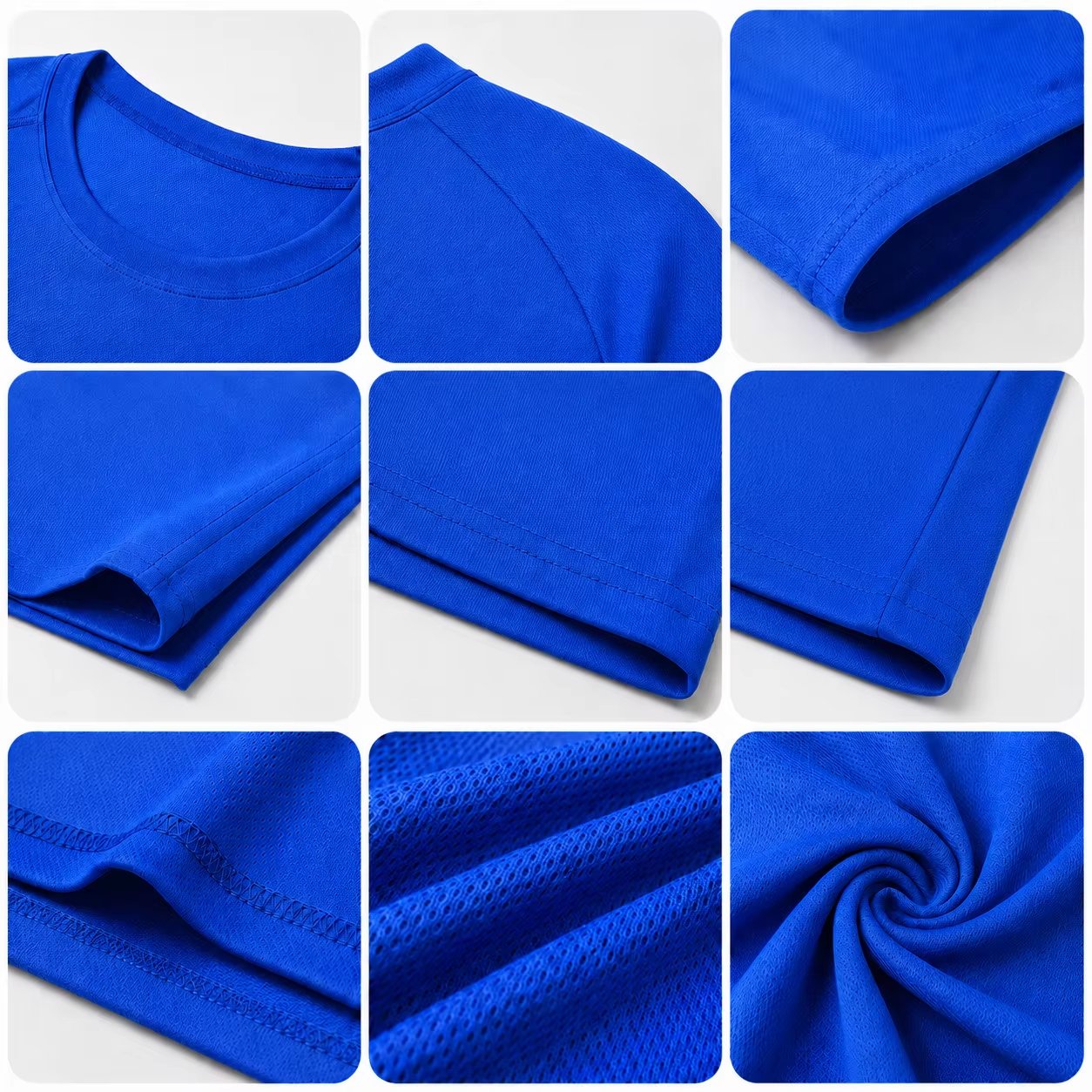
This men’s knitted T-shirt uses 100% cotton fabric at 180gsm. The short-sleeve, round-neck silhouette is easy to build into casual branded clothing, while the plain front and back leave the visual focus to your artwork. The product close-ups show the neckband, seam lines, finished sleeve edges, and bottom hem, giving you a closer look at the garment behind the design.
- Product: men’s knitted T-shirt.
- Style: short sleeves and a classic crew neck.
- Fabric composition: 100% cotton.
- Fabric weight: 180gsm.
- Presentation: blank and plain, for custom logo printing.
- Purchasing focus: wholesale bulk and branded apparel projects.
GSM means grams per square metre of fabric. It describes fabric weight per unit area, rather than the weight of the finished shirt. The finished garment also depends on its size and construction. When evaluating an apparel proposal, keep the stated fabric weight alongside the other details you need, including measurements, fit, decoration, and packing.
Why choose this cotton T-shirt for branded apparel?
At 180gsm, this shirt occupies a practical middle-ground position for buyers choosing between very light promotional tees and heavier casual styles. It is a useful direction when you want an everyday apparel item with a defined fabric weight, rather than selecting a garment by appearance alone. The sample gives your team the final reference for feel and fit.
The 100% cotton composition offers a natural-fibre choice for brands that want cotton in their everyday clothing programme. Pair that with a familiar crew neck and short sleeves, and you have a straightforward garment for staff activities, customer merchandise, and casual campaign wear. The appeal is easy to understand: a recognisable style that can carry your identity without needing a complicated garment design.
The blank presentation also gives your artwork room to work. A compact front logo can keep the look simple; a larger back design can give an event message or campaign graphic more presence. With the garment, artwork, and quantity plan coordinated together, your team can spend less effort managing separate details and more attention on a merchandise idea that fits the audience.
Start with the people who will wear it
Event teams and promotional activities
For an event, the T-shirt can be part of how your team presents itself. Think about who will wear it, what they will be doing, and how the branding should be seen. A design intended for staff working at a booth may need a different emphasis from a shirt handed out to attendees. Give the product selection and the artwork the same clear purpose.
Corporate apparel and team merchandise
The classic shape works naturally as a design direction for informal team clothing, company activities, and merchandise programmes. The lifestyle images show how a plain crew-neck T-shirt can fit into an everyday casual outfit. For a brand, that gives you a useful creative starting point: choose the garment colour and logo presentation around the people receiving it, then organize the size mix for your team.
Campaign merchandise and distributor orders
For agencies and distributors, a blank garment gives the creative brief room to develop. You might be working with a brand mark, a campaign message, or a combination of artwork elements. Share the audience and the intended distribution method as well as the design. That context helps us discuss the garment, presentation, and project requirements as one order.
How to assess 180gsm cotton for your project
For everyday branded apparel, 180gsm and 100% cotton give the project two clear material specifications. They help you keep the garment choice consistent when developing a design, reviewing a sample, or comparing proposals. This is particularly useful for distributors presenting a defined product to a customer and for purchasing teams coordinating an order across several departments.
A fabric weight alone cannot tell you everything about how a garment will feel or fit. Use a sample to consider the hand feel, drape, neckline, stitching, and overall appearance. Ask the people responsible for the project to review the same sample against the same brief. This gives your team a practical reference when discussing the order.
Think about how the shirt will be worn, too. An item selected for a short indoor promotion may be evaluated differently from merchandise intended for everyday use. Describe that use to us early. It helps make the conversation about garment selection more specific than simply asking for a promotional T-shirt.
Build the size plan before confirming quantities
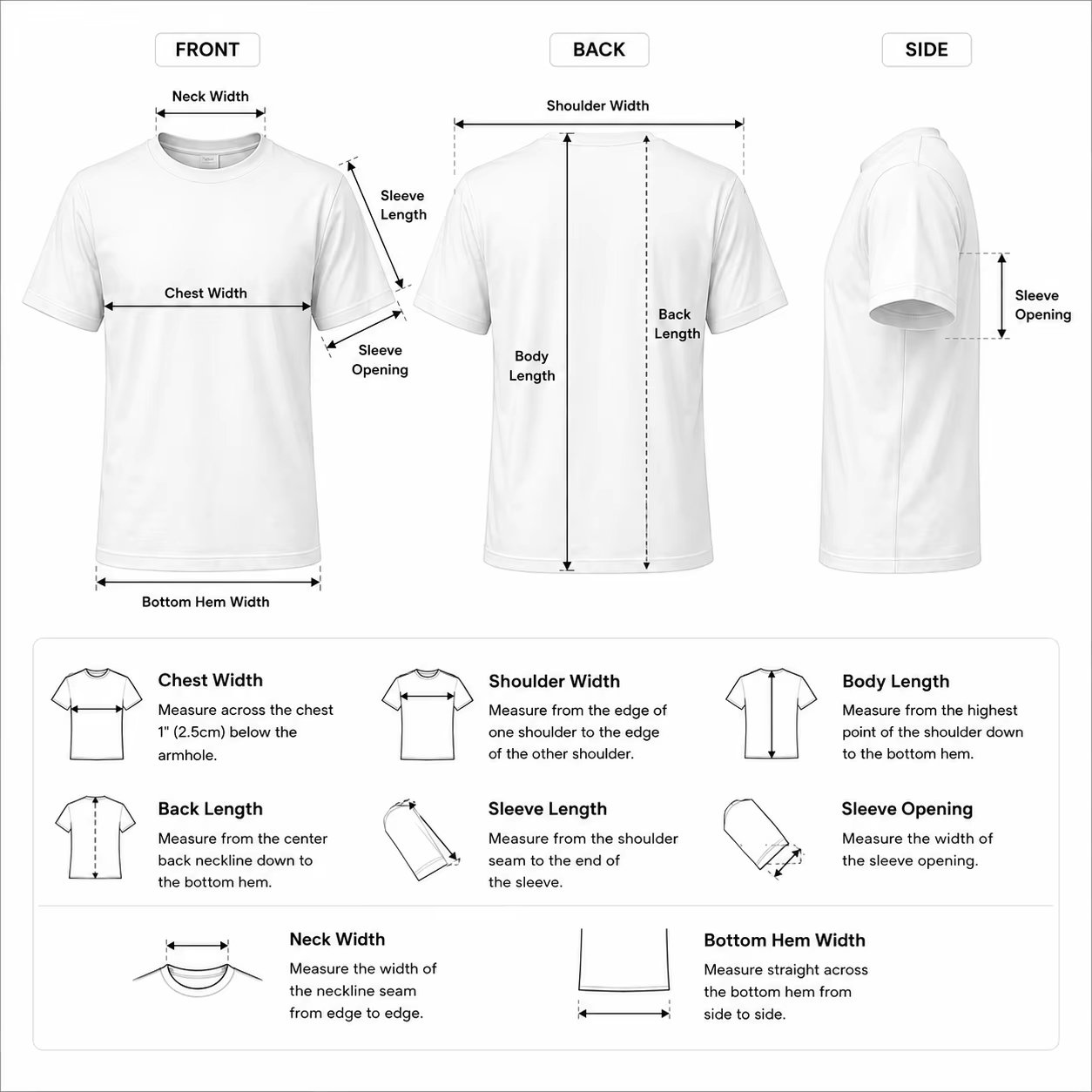
A good size plan helps the finished merchandise work for the people receiving it. The measurement illustration highlights useful reference points such as chest width, shoulder width, body length, and sleeve length. Use the product’s agreed measurement information to connect size labels with the fit your audience needs. That creates a more useful order breakdown than choosing sizes by label alone.
Where recipients are known, collect their requirements before finalizing the quantity breakdown. For open distribution at an event, use your audience information and purchasing plan to decide the size mix. Keep the breakdown in one document so changes can be tracked. If several teams are contributing quantities, nominate one person to consolidate the final list.
A sample review can also help settle questions that are difficult to answer from a photograph. Record the chosen product and the details your team has approved, then use that record when confirming the bulk order. This keeps the conversation focused on the agreed garment.
Make the logo part of a considered garment design
Choose placement, scale, and hierarchy
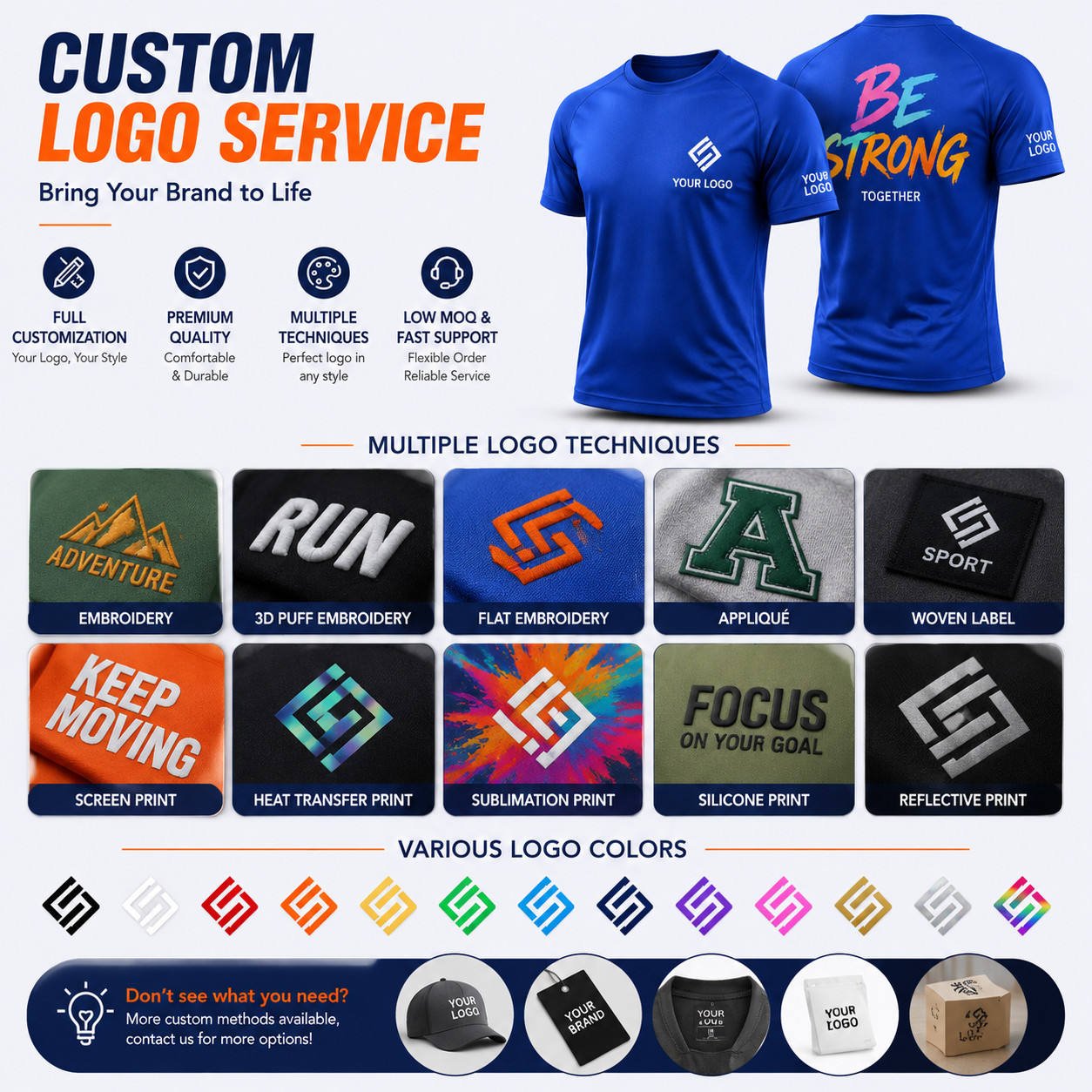
The clean front and back make it easy to plan a clear visual hierarchy. Start with the message you want the shirt to communicate: a brand logo, event name, or campaign graphic. The custom-logo examples show both restrained front branding and larger back artwork. Choose which element should lead, then develop the placement and dimensions around that idea.
Review the artwork at its intended scale. Small lettering, thin lines, and closely spaced details are useful points to discuss before approving decoration. If more than one print position is requested, include every position in the quotation brief. Keep the final artwork files clearly named so the approved version is easy to identify.
Evaluate the proposed printing method
The decoration discussion should connect the artwork with the actual garment and quantity. If you are considering screen printing, digital printing, or transfer decoration, ask which approach is proposed for your design and why. Review the expected appearance, the information needed to prepare the artwork, and the sample or proof process available for the project.
Ask how the print dimensions, number of positions, and design details affect the quotation. Where appearance is especially important, agree on what needs to be reviewed before production. A focused approval conversation is more useful than choosing a printing method by name alone.
Compare the complete cost of the apparel project
A useful quotation should reflect the same garment, decoration, and order conditions you intend to approve. When comparing options, check the product specification, quantity breakdown, artwork requirements, packing, and delivery scope. This makes it easier to see what each proposal includes and to discuss changes that could bring the project closer to your budget.
For example, you may want to compare a simpler branding layout with a design using several print positions. You might also compare different packing requirements or consider whether every recipient group needs a separate presentation. These are project decisions to explore with a clear brief, rather than assumptions about which option will always cost less.
Tell us whether your budget is for garments only or needs to cover the wider order. We can then organize the inquiry around the right basis. Clear information at this stage helps reduce repeated quotation revisions and gives your purchasing team a better comparison.
What to send us for a focused T-shirt quotation
You can begin with a short brief. Include the information you already have and identify the details you would like us to help develop.
- The intended use, audience, and distribution setting.
- Your interest in the 180gsm 100% cotton men’s knitted T-shirt.
- The expected total quantity and the proposed size breakdown.
- Your preferred garment colour for us to review with the inquiry.
- The logo or artwork file, proposed print dimensions, and requested positions.
- Any packaging, labelling, or quantity-separation requirements.
- The delivery destination and the date the garments need to be available.
- Your budget basis and any sample or approval requirements.
If the order relates to a particular event, share the event date as well as your preferred arrival date. If artwork is still being developed, describe the intended design so we can identify the information needed for the next step.
Keep the order coordinated from brief to delivery
YWJC PROMOS brings more than 15 years of promotional products experience to sourcing, customization, and project coordination. Apparel is one of the categories covered by our five independently operated factories. For a custom T-shirt project, our role is to connect the purchasing brief with the relevant product, decoration, production, and shipping discussions.
Working through one point of contact helps keep those details together. When artwork changes, the quantity mix is revised, or a packing requirement is added, the change should be reflected in the same project record. This reduces the effort of repeating information across separate conversations and makes it easier to review what is ready for approval.
Before confirming the order, check the agreed garment specification, measurements, quantity breakdown, artwork version, decoration details, packing, and delivery responsibilities. Record any agreed sample or proof approval. A complete approval record gives both sides a clear reference for the work that follows.
After delivery, useful feedback can include how the size plan worked, whether the branding presentation met your objectives, and what you would change for the next order. Keep that information with the project record so a future inquiry can build on your team’s experience.
Plan for repeat wear and sensible quantities
For promotional apparel, it is worth choosing a design that recipients may want to wear beyond the original activity. Consider the balance between a prominent campaign message and a presentation suited to later use. The right decision depends on the purpose of the shirt, but it should be an intentional part of the design conversation.
Practical purchasing choices can also help avoid unnecessary surplus. Build the quantity plan around your audience, review the size mix, and decide how any remaining garments could be used. For recurring programmes, keep records of actual demand rather than simply repeating the previous quantity. These are concrete ways to make the merchandise plan more useful.
Bring your custom cotton T-shirt project to YWJC PROMOS
A classic crew neck, short sleeves, 100% cotton fabric, and space for your branding make this 180gsm T-shirt a clear choice to explore for your next apparel project. Bring the design, audience, and order requirements together, and a plain garment becomes a purposeful part of your brand presentation.
Send YWJC PROMOS your logo, expected quantity, and intended use. Whether you are preparing an event, supplying a customer, or developing company merchandise, we can help coordinate the garment and customization details into one focused wholesale inquiry.
Request a custom cotton T-shirt quotation with your quantity, size mix, logo file and delivery destination. Planning a wider campaign? Explore our promotional product range to coordinate apparel with other branded gifts.